Oversighting the NSW DPP: An Interview with NSW Labor MLC Stephen Lawrence

The New South Wales Office of the Director of Public Prosecutions has of late been the subject of scandal and a controversial NSW parliamentary inquiry, which recommended that the state government give consideration to establishing a parliamentary committee mandated to oversight the public official who decides which serious criminal prosecutions are progressed.
In its July 2026 report into Identity Protections for Proceedings Involving Children, Portfolio Committee No. 5 – Justice and Communities made seven recommendations, which included the proposal for a committee to oversight the ODPP, as well as consideration being given to whether the current NSW Director of Public Prosecutions, Sally Dowling SC, should be removed from office.
The controversy involves former ODPP media manager Sally Killoran having told the inquiry that in October 2024, she’d leaked a story to 2GB about NSW District Court Judge Penelope Wass SC having given a 17-year-old First Nations boy, who was about to be sentenced over a break and enter incident, the opportunity to perform an acknowledgement of Country prior to proceedings.
The outrage over the leak was made more severe as it contained the name of the minor, which, if it had been broadcast, is illegal. Judge Wass claims planting of the story was in response to her having long alleged that the DPP has been progressing sexual assault cases that have no chance of success. And Killoran claims that as no one contested her proposal at the meet, she’d taken it as sanctioned.
Oversighting the leader
The suggestion that the Director of Public Prosecutions might be oversighted is contentious as the position is seen to be a fiercely independent. The role involves deciding on prosecutions devoid of government interference, which means that the decisions as to which individuals the state will prosecute are supposed to be made beyond the influence of politics.
Recommending a role be created to monitor the DPP appears to threaten this independence. The proposal triggers concerns around the impartiality of the office being compromised, because the potential for political interference becomes more likely, and the move has raised fears about the breaching of the separation of powers between the judiciary, the legislature and the executive.
The other aspect of the inquiry that’s caused consternation is the fact that the majority of committee members have recommended that NSW attorney general Michael Daley establish a formal inquiry to consider whether current DPP Sally Dowling did engage in sanctioning the leaking of a story about the performance of an acknowledgment of Country at the beginning of a sentencing hearing.
A position warranting oversight
Daley slammed the inquiry report as “a stitch up”, and he’s rejected the recommendations regarding inquiring into Dowling’s performance, as well as refusing the proposal for a DPP watchdog. The state’s chief lawmaker has further recommended a review of the parliamentary committee inquiry itself, and he’s requested barrister Noel Hutley SC to undertake the review of the report findings.
Portfolio Committee No. 5 chair Robert Borsak wrote to the NSW Crown solicitor Karen Smith last Friday, outlining concerns about senior counsel Hutley oversighting its report, and he’s further requested that the lawyer interview the other two individuals present during the meeting when Killoran raised leaking the story, and a distracted Dowling didn’t quite understand her proposal.
Sydney Criminal Lawyers spoke to NSW Labor MLC Stephen Lawrence, who was one of the majority committee members, about why he considers that the widespread opposition to the inquiry’s findings are misconceived, especially as other celebrated independent bodies, such as the NSW Ombudsman, the ICAC and the LECC, already have their own watchdogs oversighting them.
Stephen, you were a member of the now controversial justice and communities parliamentary committee into identity protections for children in NSW court proceedings, which had as its ultimate recommendation that consideration be given to the establishment of a body to oversight the NSW Director of Public Prosecutions.
In an opinion piece you wrote, you note that many legal professionals instantly get their back up when this is suggested. This is because the Office of the DPP is seen as beyond reproach.
As a NSW barrister yourself, you have long engaged with these sorts of dilemmas. So, being in the majority of those in favour of the committee recommendations, why do you consider the DPP should have an oversight body?
A lot of the responses to our report were seriously misconceived, and a lot of the people in their statements really confused issues about the current DPP and people wanting to defend her – which is, of course, their right – and the substantive issue about the merits of parliamentary oversight of the DPP.
So, for example, we had Nick Cowdery come out and slam the report and slam the suggestion of parliamentary oversight. We had similar comments from a range of other people, including politicians but also, legal professional representative bodies.
These bodies were suggesting that this idea of parliamentary oversight was a threat to independent prosecutorial decision-making. Now, that is misconceived in a number of respects, including that other bodies that have been created by legislation in NSW, such as the ICAC and the Crime Commission, are, in fact, more independent than the DPP.
For example, the ICAC commissioner is only able to be removed after a vote of the parliament, whereas the DPP can be removed simply on the advice of the executive to the governor.
The attorney general has power to give directions to the DPP, and the attorney general has the right to commence prosecutions himself should he disagree with particular prosecutorial positions.
So, the DPP is actually nowhere near as independent as some bodies already with parliamentary oversight are, and any imperative for independence is surely equally so for a body like ICAC in respect of a body like the DPP.
ICAC exists to oversight government and corruption issues in government.
But doesn’t this proposal impinge upon the separation of powers that underpins our democracy whereby the judiciary is separated from the operations of government?
The DPP is technically part of the executive government, like the ICAC and the Crime Commission. But they obviously have certain independence via their legislation.
So, this doesn’t stray into separation of powers territory?
No. The DPP is an independent statutory officeholder that has only existed in NSW in fairly recent decades, and prior to that, the job of prosecuting was under the ultimate supervision of the attorney general.
In many jurisdictions overseas, for example, the United States at the federal level, there is no independent DPP and the justice department ultimately plays that role and they’re ultimately under the direction of the president.
So, this is not a strict constitutional separation of powers issue. This is more a policy question for the parliament:
Do we want an independent DPP and if so, in what particular circumstances and what particular requirements do we want them to have?
How does the committee envision such an oversight body would work in terms of the Office of the Director of Public Prosecutions?
We said that it should be similar to existing oversight committees that are currently oversighting ICAC, the Crime Commission and the Ombudsman.
What that means is every so often the head of these organisations will attend a parliamentary committee available to be questioned, reports are given to that committee, the committee gets briefings, some confidential and some public, and that is a limited form of oversight.
But in this particular circumstance, it would have meant that when Judge Wass was concerned that the ODPP had planted a negative media story about her to retaliate against her, then she would have had somewhere to go with that allegation.
But as it was, as I understand it, she complained to the head of the jurisdiction. She might have complained to the attorney general as well. But she didn’t have anywhere independent that she could ultimately go to.
In her dissenting opinion in the inquiry report, committee deputy chair NSW Greens MLC Sue Higginson rejected the recommendation made around current NSW DPP Sally Dowling being considered for removal from office due to her possible breaking of the law.
Higginson raised the point that the evidence from the inquiry only involves a direct denial of the accusation from the director and a lot of conjecture. She says the inquiry failed as the seriousness of accusations require more than the civil standard of the balance of probabilities and rather the Briginshaw principle should be triggered, which requires stronger evidence in certain circumstances.
How do you consider these contentions being raised by the Greens member?
I’ll be further discussing this matter in parliament. I would probably not comment any further by way of responding to Sue.
NSW attorney general Michael Daley has condemned the inquiry report and recommendations as “a stitch-up” and he has called for an independent review of the inquiry.
Yet, committee chair Shooters, Fishers and Farmers MLC Robert Borsak pushed back on these assertions in a letter addressing the NSW Crown solicitor last Friday.
Borsak has further called on the solicitor to interview two other staff members present during the meeting that involved the then ODPP media manager considering that the DPP had okayed her proposal to leak a story to the press.
So, Stephen, what are your thoughts about the controversial call to review the parliamentary committee’s deliberations and findings?
I’m a little bit surprised that Noel Huntley SC has accepted this brief. In the circumstances, with such a long running controversy within legal circles in NSW, I would have thought the appropriate person to prepare a legal opinion in relation to this matter – if one choose to go down that path, personally, I think there should be an independent commission of inquiry – but if one is of the view that a senior counsel should have a look at it, I think it ought to be a senior counsel from interstate.
It should be someone who has no association with Sally Dowling – someone with no association with anyone close to Sally Dowling or someone in the same legal milieu as Sally Dowling.
Getting a senior counsel to give advice on a report that is nonjusticiable – so it can’t be reviewed in court – in circumstances where the attorney general has ruled out all of the things that the inquiry has recommended – I must admit I struggle to see how this is really legal advice.
That is why I am a bit surprised that Noel has accepted the brief, because there is obvious potential for any opinion to be the subject of political controversy in circumstances where it will be coming from someone of the same legal milieu as Sally Dowling – the Sydney bar.
This whole thing is fraught with risk. If one is going to go down the track of getting a legal opinion, it should be an interstate person.
So, these criticisms are more about making a defence of the incumbent, which people are entitled to do.
But they are dressing up their criticisms of our recommendations in respect of oversight with these concerns about independent prosecutorial decisions – now I agree the DPP has to be independent.
But these forms of oversight that exist for bodies, like the Crime Commission, like the ICAC and the Ombudsman, they are there to ensure no individual decision-making. They are not there to second guess individual decisions that ICAC might make.
They are there to be a check on power, and to basically, assess compliance with law and policy.
Now, in terms of the case study that the committee was concerned with, which was only one part of the committee’s terms of reference, we did have to look at case studies, and we did look at a particular case study.
If parliamentary oversight existed, then Judge Wass who was concerned about the planting of this story with 2GB, would have had somewhere to go, and we probably wouldn’t have needed this special parliamentary inquiry.
There would be no need, as Judge Wass would have made her complaint to the parliamentary committee with limited oversight and had her allegations accessed.
But because that didn’t exist these things were simply raised in the media. They were raised in different forums, and it was, ultimately, the subject of a special parliamentary inquiry that Portfolio Committee No. 5 saw fit to refer to itself.
So, I actually think what has happened in this matter is a really good advertisement for the merit of parliamentary oversight and it would have seen a resolution to this unseemly saga a lot earlier.
Main image of Stephen Lawrence supplied
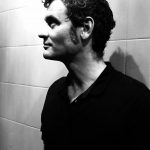
Paul Gregoire

Receive all of our articles weekly
Related Articles
 Turning Lip Service into Action: An Interview with Labor Candidate Stephen Lawrence
 The Successful Black Lives Matter Appeal: An Interview With The Wigs’ Stephen Lawrence
 Inside the Life of a Barrister: An Interview with Stephen Lawrence
 Refugees Left an Invidious Choice: Barrister Stephen Lawrence on Legal Indefinite Detention
 NSW Inquiry Recommends that Watchdog Be Established to Oversee the DPP
 NSW Labor Left Demands that Minns Government Revoke Antiprotest Regime