Talking Joining the Close Pine Gap Convergence 2026: An Interview with Three Key Activists

The Close Pine Gap–Sacred Lands Back Convergence 2026 is taking place in Mparntwe-Alice Springs over 18 to 20 July 2026, and by all reports, it’s set to be a massive event that involves a coming together of antimilitarist, antiwar and pro-Palestine activists from across the continent to discuss and workshop ideas about nonviolent direct action that can stop rising militarism across the planet.
Pine Gap is the mid-1960s established US surveillance base that operates in the Red Centre of the continent, about 25 kilometres southwest of Mparntwe. The facility has four satellites that cover half the Earth’s surface, and intel that is sourced there is used by the US to strike targets across the planet, and it’s understood that Israel has been utilising this data to conduct its mass murder in Gaza.
The last three years since the Gaza genocide began have seen rising awareness about and activism against the military machine across this continent, with grassroots groups conducting protest actions in an effort to cease the policies and local operations that contribute to the mass slaughter in the Gaza Strip, and also to counter the significant surge in militarism globally over that same time.
The organisers of the Pine Gap Convergence are seeking to bring divergent individuals and groups together to coordinate, share ideas and to plan how to more effectively counter these developments in collaborative ways. And the three-day event that includes two days of workshops will feature key figures from the local antiwar movement strategizing on how to best move forward together.
On the shoulders of giants
The 2026 Close Pine Gap Convergence has precedent. There have been a number of large gatherings to protest the US base in the middle of the continent over the decades, with one of the most significant being the 1987 convergence that involved the Alice Springs Peace Group and the Australian Anti-Bases Campaign Coalition, which brought a sizable number of groups together.
In the mid-1980s, the fears regarding the prospect of a full-scale planetary nuclear war were significant. And one of the issues with Pine Gap is that it makes this country a target if such a war broke out. This was a grave concern in the eighties, and this is of rising concern once again, as a new nuclear arms race is growing exponentially at present.
Right now, there are two key US military installations established on this continent, Pine Gap on Arrernte land and the naval intelligence base North West Cape on Yinigurdira land, which is understood to have played a role in recent US operations in the Middle East. But in the 1980s there was a third base, the now defunct US air force base of Nurrungar on the land of the Kokatha people.
Activist groups were coming together back then to warn the broader Australian public about what was actually going on at these secretive US bases and why they were problematic for the population. The 1980s call to close Pine Gap saw such a development as a first step towards closing all foreign military bases across the Asia-Pacific and as a move towards decolonisation of the region.
Coordinating the next move
Organisers are encouraging all to converge on Mparntwe next month, so they can hear from speakers such as Greens Senator David Shoebridge, Googatha elder Aunty Sue Haseldine, Professor Richard Tanter, Palestinian activist Remah Naji, human rights lawyer Rita Jabri Markwell and Yankunytjatjara-Anangu woman Karina Lester and many more.
Freelance journalist Jorgen Doyle, who is an organiser of the Close Pine Gap Convergence, explains that bringing together activist groups from across the continent is important in terms of future action, but also, to raise awareness about the massive US miliary buildup that is now occurring in northern Australia due to the prospect of war with China, which a lot of southerners are unaware of.
Sydney Criminal Lawyers spoke to Doyle, along with Yawarllaayi and Gomeroi elder Aunty Barb Flick, who was a key participant in the 1987 convergence, as well as vocal Naarm-Melbourne antimilitarist activist Palestinian Syrian woman Nathalie Farah, about why it is important to converge on Pine Gap in the present setting and why it’s a priority to see the US installation closed down.
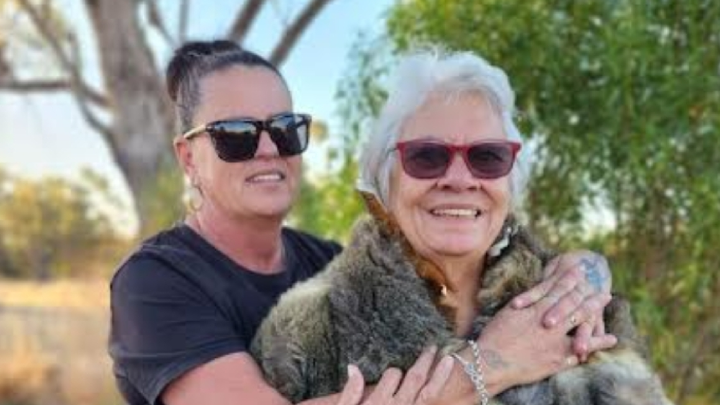
Aunty Barb Flick:
Aunty Barb, you were involved in the 1987 Close Pine Gap protests that took place on Arrernte land at the site of the US intelligence base over two days in October that year.
Then during the March 2024 IPAN Pine Gap and Gaza webinar, you suggested that it was time for another such convergence on the US spy base. And the 2026 Close Pine Gap convergence is soon to take place over 18 to 20 of July 2026 in Mparntwe-Alice Springs.
So, firstly, having been at the 1987 Close Pine Gap protest action, what led you to consider that it is time for another such convergence?
In 1987, the first concern about Pine Gap was it was a first strike target. Many people in Alice Springs were worried and concerned about the base being a first strike target. I was living in Alice Springs at the time.
So that was the first thing. The second was the collaboration between the Alice Springs Peace Group and the Anti-bases Campaign to call on all our allies to come and get a big enough group of people together to get media coverage to show the Australian people how the country was involved with the USA and the close ties that they have.
The reason that I said we need to go back to Pine Gap is because that is where a lot of the damage is being done to our comrades in Gaza. Pine Gap is a signals intelligence surveillance base and I believe that information is being used by the IDF to target Gaza. For example, the journalists murdered there, and the fact that the satellite system out of Pine Gap with all its intel can pinpoint exactly where these people are.
Australia’s denial of it, and that its hands are clean, well, they’re bloody not. We are certainly involved in all of this. So, I thought the only way that we can let the Australian public know of how much we are involved with Israel and the USA is that we go back to Pine Gap and we have these discussions.
We will talk about these four big satellites that now cover the mid-Pacific, Southeast Asia and Palestine. The British also have four satellites in Yorkshire. So, the US has got the planet fairly well covered.
There has been so much technological advancement since 1987. The AI data centre at Pine Gap is now a much bigger facility, the mainframe previously powered by diesel is now powered by electricity. Taxpayer money is coming out of Australian pockets to contribute to the systems at Pine Gap that are now being fed by electricity being paid for by Australian taxpayers and so that is why it is timely to go back.
This makes Australia responsible by providing intel to the USA and Israel that has resulted in the devastation in Gaza! It is time to tell the Australian people are made aware of how this country is complicit in the murder of innocent people in Gaza and other places in the Middle East.
Under a recent agreement between Australia and the United States, the Australian government has no veto rights if the USA decides to enter into a nuclear war. Australia is now tied into the nuclear war operations coming out of the USA.
The 1987 Close Pine Gap convergence was part of 12 months of actions commencing in 1986 that involved the Australian Anti-Bases Campaign Coalition and the Alice Springs Peace Group. The first convergence involved two groups breaching security at the facility in order to enter the grounds of Pine Gap.
What was it about that time that led to such broad cooperation between differing activist groups to stage a year-long coordinated set of actions? And how would you describe the 1987 convergence at the Pine Gap site and what it achieved?
The convergence achieved the media attention we were looking for. As part of the Alice Spring Peace Group, there were members that worked in different sorts of portfolios. I was involved a lot in the anti-bases campaign with Brian Doolan and Russell Goldflam in particular.
The anti-bases activists led by Denis Dougherty and Hannah Middleton were critical in bringing their membership to the actions. This collaboration engaged in meetings and conferences around the country for a year leading up to the 87 convergence.
There were groups around the country involved in the 1983 women’s march to Pine Gap also came in large numbers. So, people around the country were coming together as a community and becoming more and more interested and concerned about the role of Pine Gap and the role of the US and the Australian government.
In terms of the Australian government in particular, it was the violation of the sovereignty of the Arrernte people in Central Australia that has been a big concern of mine. My life’s work has been around land rights. It was a big concern that the Arrernte people had lost access to their lands. Our sovereign rights and responsibilities come from our Country, our lands.
The Australian government’s decision to lease the land of the Arrernte lands to the USA is a violation of the United Nations International Covenant on Economic, Social and Cultural Rights. Losing access to our lands means losing information critical for new generations to learn about cultural sites, about our laws and about our spirituality. The fact that the Arrernte people were locked out was completely horrendous.
We have never sold or given up our lands to the British Crown since the invasion. We have resisted encroachment on our lands despite the mass murders that killed many of our families. We continue that fight today.
Many of our people are homeless in our own country, and we exist with the lowest socioeconomic indicators, because we have no land base. They talk about intergenerational wealth and equity. Well, talk to us about how we have been treated since the British stepped ashore at Gamay, land of the Bidjigal people.
The murders of our people across the country since the colonisation by the British was brutal. The demands and the fight for our own sovereignty and independence have gone on since the invasion of our land and as an activist from western NSW said “even if it takes a thousand years, keep fighting”.
There is the denial of Arrernte sovereignty over the lands that Pine Gap is based on, and the fact that Australia thinks it is free to give away our lands to be used as a base that is complicit in the murder of men, women and children on the other side of the world, is just abhorrent to us.
That was the big thing about the 87 campaign it was really disciplined. We worked on nonviolent direct action. The Alice Springs Peace Group worked in cells of about four people, and we trained especially for that action.
One of the people in the cells within the Alice Springs Peace Group was nominated to go through the fence, which we did, and there were 231 arrests at that time.
I was arrested, and when it came time for me to go to court in Alice Springs, I walked in and was asked where my legal representatives were. I answered I was representing myself and then was asked how I would plead.
I said, “Well tell me what I have been charged with?” It was trespass on Commonwealth land. And I said, “Well, I am not guilty. I was on Arrernte land with the permission of the Arrernte people. So, of course, I am not guilty.”
I made a long speech about colonisation and invasion of our country and the murder of our people. At the end, I pointed my finger at the magistrate and said, “One day you will find yourself in an international court for trespassing on our land.” I was convicted.
I walked out with what I think was 240 hours of community service.
But Father Phillip from the Catholic Church at Alice Springs at the time met me at the door and said, “We are registered. So, just come around to the presbytery and I will sign off on your hours.” So, I worked in the presbytery for a while.
I understand that 1987 was important because the following year there would be discussions between Australia and the US about whether to extend the agreement on Pine Gap.
And in 1988, when the Hawke government agreed to do so, they changed the name, so Pine Gap was from then on known as the “joint” facility, signalling it was both a US and Australian operation.
So, I’m wondering whether back in 1987, Pine Gap was already considered a joint facility or if it was just considered a US base in the middle of the continent?
We talked about US bases around the country, including Pine Gap. So, yes, we referred to them as US bases.
It was a big change when they started talking about joint facilities, which is an absolute joke, because Australia does not have any decision making power or get much information from the US about their activities at Pine Gap.
But, at the same time, Australia is now tied into the nuclear war operations through Pine Gap, and Australia signed off on this agreement with the US, and prior to that agreement, it was made certain that Australia has no veto over decisions made by the US.
So, if the US decides to engage in nuclear war using Pine Gap, the Australian government has no right to say that it doesn’t think that it is a good idea. They have no veto over any of those decisions.
Another aspect to the organising you took part in during the 1980s, is it involved groups from right across the region not only calling for the end of Pine Gap, but further, that all bases right across the Asia-Pacific be closed, and this was seen as a first step towards the demilitarisation and decolonisation of the entire region.
So, can you talk about the international solidarity aspect to the organising against western bases in the Pacific in the 1980s?
The Independent and Nuclear Free campaign in the 80s across the whole Pacific, including Australia, was very strong.
My interest was with Kanaky or New Caledonia as the French colonials call it. I met Alphonse Dianou, a young Kanak man who was fighting for the independence from the French on Ouvéa, which is one of the three Loyalty Islands of Kanaky. Alphonse was murdered by the French in 1988, fighting for independence of his homeland, the small island of Ouvéa.
I needed to go to see his family after he was murdered. I applied for a visa to fly to Kanaky. This was denied by the French embassy in Australia.
My application was then supported by some parliamentarians, and it was sent to Paris, where finally they agreed that I could have a visa.
I travelled to Kanaky, and when I arrived in Nouméa, I had my suitcases searched at the airport. They let me out at the airport late at night, where I was met by my Kanak colleagues, who took me into Nouméa through a secured route, and they found a hotel for me close to the Australian embassy.
They took me in and searched the room, the bathroom and under the bed. They told me not to open the door to anybody until the next day.
They came to pick me up the next day, and I did some interviews on local Kanak radio. So, it quickly got out that I was calling for an investigation of what had happened at Gossanah with the murder of Dianou and the other young men.
I travelled to Ouvéa, after a couple of days in Nouméa. I was encouraged to travel under another name. I refused. I was met at the airport by a line of gendarmes with machine guns.
Djubelly Wea was on the same flight. He was a leader in the village of Ouvéa and a friend of Alphonse. I asked him to stand with me as we got a photo of us taken standing together with a soldier with a machine gun behind us. I thought it was so silly.
I stayed in the village for a few days, and I was taken to the cave where all the young men were killed, and it just reminded me of the massacres in Australia.
Just outside of the town where I spent a lot of my childhood, living with my grandmother, Sylvia Fernando Walford, there were an estimated 400 people near Brewarrina murdered at a place called Hospital Creek.
When people talk about massacres, what it means is dawn raids, people coming in, our people waking up, babies crying, and the noise of horses coming and the sounds of shots being fired and then the slashing of bodies. I think about the utter helplessness of our unarmed mothers, fathers and family unable to fight against guns and swords. The nightmare of watching families dying all around them. It makes me angry still.
It reminded me of what happened to us. The invasion of our country has a terrible history. But even to this day, we are supposed to believe that Port Arthur and Bondi Beach were the biggest massacres in Australia. But that is not true.
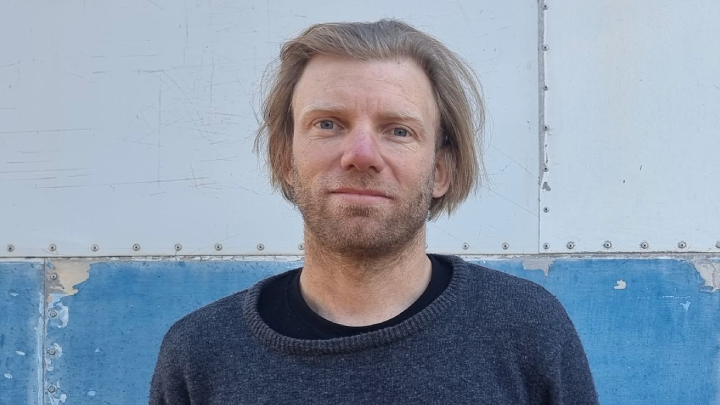
Jorgen Doyle:
Jorgen, you weren’t at the 1987 Close Pine Gap convergence, but you did take note of the suggestion that Aunty Barb made in terms of it being time for a new convergence and you went on to organise the upcoming event with her encouragement.
So, why is the time right for another convergence on Pine Gap? What sort of purpose will this event serve directly and what sort of opportunities do you see it opening up beyond what actually happens over the July weekend?
I was not at the 1987 convergence, but in the process of organising the current one I have been reading and researching a lot about previous convergences, and it is honestly very inspiring and humbling to see how strong, international and cross-sectional the organising around the 1987 convergence was and the broader movements that contributed to that convergence.
These were broader movements for decolonisation here, Aotearoa and right across the Pacific, as well as having a focus on nuclear colonialism in the Pacific.
The vision was removing all foreign military bases across the region. And as I said, it really went beyond just this continent.
Certainly, from the present vantage point, everything that they were calling for in the 1980s is more relevant than ever. We seem to be entering a new age of nuclear proliferation. So, the threat of nuclear war is back.
There has been an incredible mobilisation of grassroots colonial resistance to the genocide in Palestine and solidarity with Palestine on this continent and all across the world over the last couple of years.
Every regional town across Australia the size of Alice Springs, not to mention the cities, have a Palestine solidarity group, and one of the purposes of the convergence, from our point of view, is to contribute to consolidating that huge upswell of antimilitarist-anticolonial organising over the last couple of years.
Also, it’s to make sure that all of those groups – some of which are in regional locations, where they don’t have the same sort of access to each other and to other resources to support themselves – become increasingly networked and get to know each other and build collective strength.
So, that is a real part of the convergence. But also, the Australian government is militarising fast. In 2018, the Turnbull government announced that they wanted Australia to become one of the top ten weapons exporters in the world, and our present Labor government hasn’t departed from that vision. Labor very much backs that vision.
Over the last two and a half years of Palestine solidarity organising, we have seen that groups, particularly down south and across the eastern seaboard, have skilled up on knowing where weapons facilities are in their towns and their regions and then targeting those facilities.
Northern Australia was the top overseas location for US military construction spending last year.
There is a huge miliary build up happening across northern Australia. This has been ongoing for a while. And my sense is that the antimilitarist movement in Australia is not as aware of all of the military bases and other facilities that are expanding across northern Australia.
So, we would like to bring those two halves of the antimilitarist movement on this continent together: the group that target weapons facilities down south and the groups targeting the Pine Gap facility in the north, but also Tindall airbase, the US marines stationed in Darwin, the US fuel tanks that have recently been built in Darwin and all of the military training facilities in Australia.
Some of the biggest war games or war rehearsals in the world take place in northern Australia.
Aunty Barb mentioned that one of the biggest things about the 1987 convergence was raising awareness around the Pine Gap US base being a nuclear target if an international war broke out.
You’ve just mentioned the potential for nuclear war is rising again. So, how would you describe the concerns in the present about this threat compared to those that led to the 1987 event?
Compared to the 1980s, the concerns are a little different. People of my generation or even younger antimilitarist activists on this continent are not really aware of just how powerful the antinuclear movement was throughout the 1980s, and just how prevalent the threat of nuclear war was here and right across the world.
I certainly don’t think the threat of nuclear war is on people’s radars now to the same extent as it was throughout the 1980s and it doesn’t animate people’s fears in the way it did then.
People are increasingly talking about the fact that a lot of the nuclear arms control agreements that came about throughout that era, with the great power competition associated with the Cold War, have lapsed. And now there is a lot of nuclear proliferation happening around the world.
So, people are starting to talk about this, and this is especially so with the AUKUS agreement, as it involves nuclear submarines and also, in terms of where the nuclear waste that the second-hand nuclear submarines we are now getting from the US, is going to be stored.
Broadly speaking, the issue of nuclear weapons and nuclear waste and everything about the nuclear lifecycle is increasingly becoming something that people are concerned about.
You write the Militarism in the NT newsletter. For a lot of people living around the country, Pine Gap is something they hear mentioned every now and again, and in terms of the ongoing US militarisation of northern Australia that you write about in your newsletter, many people are completely unaware that it’s occurring.
Can you talk about what is happening in northern Australia in terms of the United States military moving in, and why this new campaign, just like the one in the 1980s, is about much more than simply Pine Gap?
As I mentioned, northern Australia was the top place for US military construction spending in 2025.
That money is going into Pine Gap partly, as the facility is undergoing its largest ever build out, and this construction is specifically about hunting for and targeting Chinese nuclear missile silos.
But there are also huge upgrades happening at the Tindall airfield, which is just outside of Katherine and is basically a US-Australian joint facility, and the aim is that by the end of this year that airfield will be able to host six nuclear-capable US bombers.
So, we could have B-52 bombers with nuclear weapons stationed at that airbase very soon.
Some of these developments precede AUKUS. There is the US marine deployment that has been in Darwin since 2014, which is part of the 2014 Force Posture Agreement that was signed under the Obama administration.
There are 2,500 US marines on rotation there, and Pete Hegseth, the US secretary of war, recently said that the US would like to increase the number of US marines.
We have these US military fuel tanks that were built in Darwin Harbour with absolutely no construction approvals and then retroactively given construction approval by the Northern Territory Country Liberal government.
The Northern Territory supports some of the largest war rehearsals in the world. There is Exercise Talisman Sabre. Currently, Exercise Southern Cross is happening, which involves Japanese, Australian and American fighter pilots flying F-35 jets.
So, you can imagine the point of Exercise Southern Cross is to subordinate the Japanese and the Australian militaries to the US military, so as to have all of them being able to fly these F-35 jets in the event of a war with China.
We also have Exercise Pitch Black, which is another massive exercise that will be happening from 20 July, which is the day that the convergence on Pine Gap ends.
As you say, what is happening in northern Australia is relatively hidden to a lot of people in the south of the continent.
So, what about people living in northern Australia? Is the build-up obvious to them, or if you are not informed about it, can you still be unaware that it is happening around you while living up north?
It is possible to be quite unaware. There are 1,000 Pine Gap workers in this town of Mparntwe-Alice Springs, which has a population of about 30,000. There are also about 2,000 other family members of Pine Gap workers in this town.
So, you have about 10 percent of the population in this town here due to the base, but it is remarkable how easy it is to forget about the base, as you go about your daily life.
Across the Top End and in Darwin, the Northern Territory and Australian governments have worked to normalise the military presence there. There is military tourism in Darwin, centred on the fact that it was the only Australian city bombed during World War II.
The current far-right Country Liberal government in the Northern Territory recently announced a plan and some extra funding to promote military tourism across the Northern Territory, in relation to some of those big military exercises that I was talking about.
You also have F-35s flyovers that take place every year. The military flyovers happen on the 4th of July in Darwin.
So, there is an effort to normalise the US military presence. You see it a lot more in the Top End then you do here.
In Alice Springs, there is an effort to make it invisible. But in the north, where they are doing big military exercises, it is much more difficult to do that.
There is an effort to normalise it and even promote it and have people take their kids to the foreshore to watch the F-35 jets fly overhead.
There have even been some other developments, involving military hardware brought out at the Darwin show or somewhere like that.
So, if you are aware of that, does there seem to be a blurring of the authority in terms of who is really in charge, in respect of the US and Australian governments up there?
Certainly, the US military is the largest presence at a lot of the war rehearsals that do take place.
At Talisman Sabre last year, there were about 20,000 US troops and then about 10,000 Australian ones.
The US commanders speaking to the media at that time, were really quite explicit about what they were rehearsing for, which was a war on China. And when they talk about it, it is the US going to war with China, not Australia going to war with China.
Another way of answering your question relates to the director of a Northern Territory government agency called Defence NT, which is tasked with promoting the military industry across northern Australia and attracting military companies and industries to set up shop across northern Australia.
The Defence NT director is called Jimmy Kiploks, and he is apparently one of the chief architects of the AUKUS agreement.
The Northern Territory government got him to head up Defence NT, and he has sent out a mass email to all Northern Territory government departments announcing that this year is the 250th anniversary of the US Declaration of Independence and given how important the US is to the Northern Territory, he was requesting that all departments look into their existing budgets and find some money to celebrate the US Declaration of Independence on the 4th of July.
Kiploks asked them to come up with creative ways to celebrate this, for instance, by lighting up government buildings in red, white and blue colours.
These celebrations of the declaration are all supposed to be funded by NT taxpayers as well.
Prior to the Trump administration taking office, there was a lot of talk regarding AUKUS, along with developments in northern Australia involving the US military, and about a pending war on China.
But since Trump came to office, we don’t hear about China as much anymore. We’ve more so been hearing about how the US is making incursions into Venezuela or its blockade of Cuba and especially, the US-Israeli wars on Iran and Lebanon.
So, in your understanding, has the buildup to war on China taken a backseat? Should Australians still be concerned about what the US is doing in this country in terms of such a conflict?
Certainly, US imperial aggression has become ramped up and a lot more overt under the current Trump regime.
We are hearing with the US-Israeli war of aggression on Iran that US munitions are quite depleted, and we also have heard about how China has learnt a lot from the US war on Iran.
In fact, people all over the world saw all the US bases across the Gulf countries get struck by Iranian retaliatory strikes, and we are seeing that those bases are vulnerable and are easy to penetrate.
So, if Iran is able to strike those bases, China is certainly capable of striking the US bases that are encircling China, or what US military planners refer to as the First Island Chain.
The First Island Chain is Japan, Okinawa, South Korea, the Philippines and Guam. And ÙS military planners are very aware that all of those bases are vulnerable to a Chinese military strike in the event of a war on China.
Given that those bases are so vulnerable, the US military sees northern Australia, with its relative distance from China, as more important than ever, as a location that the US Airforce and the US Navy can retreat to if their bases across Japan, South Korea, Guam and the Philippines are targeted.
So, the bases across northern Australia are becoming much more important.
What does this mean for Australia? Well, US munitions are really depleted after the war on Iran, and it is really hard to see how they could sustain a war on China. But I don’t know if we can rely on US rationality with regard to that.
There is no evidence that the planning for war that is taking place in northern Australia has slowed down.
The Australian government recently announced another 13 to 16 billion dollars to harden US-Australian bases across northern Australia, which is very much about protecting them from Chinese missile strikes.
It all goes to show that the only reason that locations on this continent are at risk and populations on this continent are at risk is because of the embedded US military presence across northern Australia.
The US is a declining superpower and with its appetite for a war with China, it goes to show the risk and how vulnerable that those populations and locations across the continent really are.
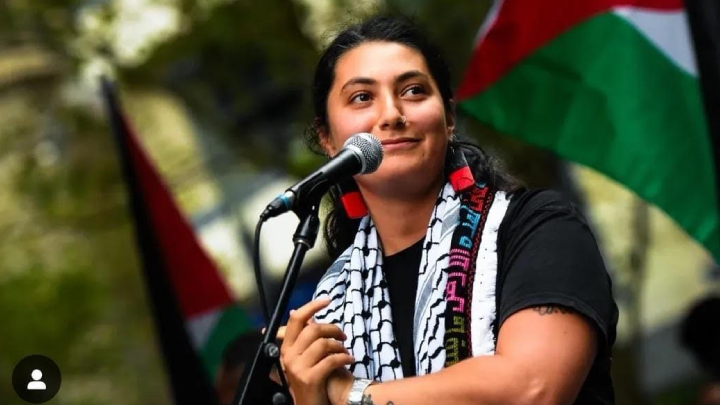
Nathalie Farah:
Nat, you’re heavily involved in the Naarm-Melbourne antiwar and antigenocide movement. This can involve blockades of ports or actions outside of weapons manufacturing sites, or protest marches through the CBD.
However, actions regarding the growing US militarism in northern Australia and the impact that Pine Gap is having on global affairs, isn’t much of a focus for people living down south of the continent.
The Close Pine Gap convergence in July will bring activists from southern states and those from the north together. The three-day event will bring people from across the continent to speak about their concerns and what they’ve been focusing on.
Why is this sort of activist networking event important in the current political climate? What sort of outcomes would you like to see happen in terms of divergent perspectives and groups coming together?
Over the last couple of years, we have witnessed some incredible mobilising around Palestine, and the area of antimilitarism and antiwar started to become more in focus as the movement in general and people, who are really infuriated and enraged about what was happening in Palestine, started to see how this global system, the military-industrial complex, actually works.
People started to understand this continent’s role in that global supply chain of weapons and surveillance.
So, we have seen pretty amazing antimilitarist, anticolonial and pro-Palestine mobilisations, and in the last year specifically, we have seen a lot of intersectionality coming through and the joining together of forces to try and transcend those traditional boundaries of movement dynamics.
We know that every regional town the size of Alice Springs has a Palestine solidarity group, and it is so significant to see that sort of organising going on at that local level and not just in big cities, as would usually be witnessed.
We are noticing that in essence, we have had a lot of mobilisations and a lot of different tactics utilised right across the spectrum, but we are really lacking in strategy.
So, we thought converging, coming together to hear what everyone is up to, what kind of strategies they are using and what are the pinch points would be ideal, so we can see what the state of the movement is, what skills are available and what skills need to be developed.
The 1987 Close Pine Gap convergence involved the Australian Anti-Bases Campaign Coalition, which organised not simply an interstate movement, but it went beyond borders to form an international movement that covered the Asia-Pacific region. It had big goals in its sights like complete demilitarisation and decolonisation of the region.
We are at a point in time when militarisation is on an extreme rise, and even with the huge mobilisations and solidarity with Palestine across the planet over recent years, the horrors of the Gaza genocide are not only ongoing, but we now have further wars in Iran and Lebanon and the US now has its sights on nations like Cuba as well.
Do you see the potential for a growing grassroots activist network to actually impact these developments in such a way as to avert greater catastrophes? Can people power still overcome the ever-increasing strength of the war machine?
In all honesty, my opinion about that changes quite often. Sometimes I feel very optimistic about the world and our ability to impact change, and I especially, feel optimistic, when I take a zoomed-out perspective and I think of the concept that First Nations people refer to as ‘deep time’.
That makes me understand that the struggle now and the work that we are doing now is building upon decades and decades of work that has been done by millions of people around the world and we know that antimilitarist and antinuclear movements have had successes in the past.
On some other days, when we are experiencing police repression, or when we are seeing people burnt out or policies being introduced to stop us from doing the work that we are doing, I don’t feel very optimistic, and it feels almost impossible for people to oppose an increasingly militarised police force and the polarised political sphere on this continent.
The rise of Pauline Hanson and One Nation, and also, what happened at Camp Sovereignty last year with the Nazi attack, these are things make it really difficult to believe in people power.
In seeing around the world examples of what the military is doing and the changing nature of war, with the increasing use of AI and drones, trying to imagine going up against this global imperialist military-industrial complex with just people power and nonviolent direct action feels impossible sometimes.
But what I want to say is, whether it works or not, the alternative is for us to sit back and just see these catastrophes unfolding and the reason why we keep going is not necessarily that we believe that it is going to make a difference in our lifetime, but the alternative is not to do anything. And in all honestly, that is not really an option.
It is also an opportunity for us to get out of our bubbles, and to see what other sorts of possibilities are out there, and how we can move forward together.
The last thing to add about our current political climate is that with repressive laws in place, quite a lot of police repression and persistent raids and the Royal Commission, it is very important that we keep things moving and we don’t stagnate.
We need to continue to shift our strategies and ways of acting as the world around us changes.
So, there is a lot of work being done in this space and it is really important to come and communicate together. And what better place to do that than at Pine Gap, which exemplifies the most significant and tangible location of the US-Australia alliance.
The other aspect of it is that through this resistance and through supporting the forces that be, we are building these networks and we are building these systems around us for community to depend on each other, so that when crises do happen – because they will happen – there is a way for us to connect and support each other, and that is the case both locally and globally.
So, it is to build a movement so we can resist the changes, and to present the alternative possibilities to the rest of the world, so the world starts to see these options.
The capitalist system is collapsing and many struggle to be able to see an alternative, and to be able to present some sort of alternative is the goal.
And lastly, the Close Pine Gap–Sacred Land Back Convergence 2026 is taking place over 18 to 20 of July. What’s going to be happening over the weekend? Why should people from across the country take part?
There is a two-day conference with a third day of action. So, what we are trying to do is to reach out to audiences and to people from across the political spectrum and across the movement.
We are not just trying to get the same people to come. This is an open space. It is accessible and it is a space that is safe for debate and conversation. You don’t have to be a diehard leftist to attend. That is a really important thing to note about the convergence.
There are two plenary sessions, with some amazing speakers, like Amy McQuire and David Shoebridge, Karina Lester and Aunty Sue and so on.
Across the days as well, there are a series of workshops that will happen. Some of them will be concurrent, and they will be going all the way from talking about First Nations justice to the BDS movement and covering the history of previous convergences.
They will also be looking at creative actions and looking at the role of theatre and music in resistance, and the role of unions and sanctions, as well as the power of storytelling and at the end, we will altogether finish up with looking at “where to next”: the pathway forward towards building a continentwide anti-US and antimilitarism movement.
This is the crux of it. This is why we are really excited to be organising this, because we want to look forward to building coalitions across the continent similar to the coalitions that have existed in the past, like the anti-bases coalition, so that we can work more strategically together.
So, it is going to be significant in that it is bringing people from across the continent and across the movement and building on work that has existed for such a long time in Mparntwe-Alice Springs.
The final thing is that this is a proactive event. A lot of what we have been doing over the past couple of years, especially with the Palestine movement, has been reactive, which is okay, because we were reacting to genocide and catastrophes, but reactivity is not very strategic.
So, this is the first time that we are taking a step back, pausing, communicating and planning, so that whatever comes next is happening with consent and with accountability.
And it is happening with strategic review, and in collaboration, instead of just everyone doing little things in their own areas and it not being significant enough to see the policy change that we need.
So, that is the big hope out of the convergence.

Paul Gregoire

Receive all of our articles weekly
Related Articles
 Pine Gap: Enabling the US to Kill Civilians
 “Pine Gap Is a Place of Aggression”, Say Peace Activists in Court Over Blockading the Facility
  Questions Need Answering on Pine Gap and Gaza: Interview With Professor Richard Tanter
 Pine Gap, Our Nation’s Hideous, Grievous and Complicit Gaza Secret, Exposed
 Activists Blockade Pine Gap Facility Due to Evidence of Complicity in the Gaza Genocide
 Protesting Pine Gap: An Interview with Peace Pilgrim Margaret Pestorius