The Offence of Animal Sexual Abuse in New South Wales
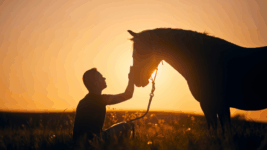
New South Wales man Joel Kerin, then 30, pleaded guilty to four counts of bestiality in Bega Local Court in October 2024. But since March 2026, this crime has been modernised and is now known as the offence of animal sexual abuse. Kerin also pleaded guilty to counts of producing and disseminating bestiality material, which is now encompassed by the offence of prohibitions on animal abuse material.
Kerin admitted to having sexually assaulted a 17-year-old mare, or female horse, called Gemma, on four occasions in 2023. These acts of animal sexual abuse took place on Djiringanj land on a property, where Joel lived with his wife Mickayla, in the southern NSW town of Frogs Hollow.
The animal sexual abuse was discovered after Mickayla had told NSW police about the incidents, which led officers to search the Bega Valley farm on 16 January 2024, and they seized electronic devices and images. Photographs and video footage of the sexual assaults involving the horse existed as Mickayla had filmed the incidents, which she initially denied.
Bega District Court Judge Andrew Haesler went on to sentence Kerin to a 15 month intensive correction order (ICO) in June 2025. The judicial officer also required the offender to undertake 200 hours of community service and a sex offender rehabilitation program.
Mickayla Kerin admitted to having sent texts of the horse’s genitalia to Joel and having concealed the abuse. Sydney District Court Judge Miiko Kumar found that domestic violence and coercive control had contributed to her offending, and she was convicted on offences relating to animal sexual abuse and concealing crimes and was sentenced to a 12 month conditional release order in April this year.
The offence of animal sexual abuse
Section 79 of the Crimes Act 1900 (NSW) contains the offence of animal sexual abuse, which is a crime that carries up to 14 years imprisonment. This offence has replaced and modernised the former crime of bestiality, of which Kerin was convicted over. The replaced offence had not been defined under statutory law and had remained reliant on common law interpretations.
Animal sexual abuse is defined, under section 79AA of the Crimes Act. Such abuse includes “the penetration to any extent of the genitalia or anus of an animal by a part of the body of a person, or an object manipulated by a person” or “the penetration to any extent of the genitalia or anus of a person by a part of the body of an animal”.
Further acts of animal sexual abuse include “the introduction of a part of the genitalia of an animal into the mouth of a person” or “the introduction of a part of the genitalia of a person into the mouth of an animal” or “the application of a person’s mouth or tongue to the genitalia or anus of an animal” or “the application of an animal’s mouth or tongue to the genitalia or anus of a person”.
But animal sexual abuse does not include any of a list of “excluded acts” contained under section 79 of the Crimes Act. These excluded acts involve those carried out “in good faith” for veterinary purposes, agricultural or aquacultural purposes, as well as hygiene or scientific research purposes.
Further excluded acts are those carried out to assist a female animal in giving birth, along with those carried out in the best interests of an animal for their physical health or care or an act prescribed by the regulations.
For the prosecution to prove that a defendant is guilty of the offence of animal sexual abuse, they have to prove beyond a reasonable doubt that the individual has intentionally perpetrated one of the included acts that comprise of sexual abuse upon an animal.
Defences against an act of animal sexual abuse
In terms of defences against a charge of animal sexual abuse, there are a number of common ones available, along with the statutory reasons or excluded acts listed in section 79. This involves arguing that the behaviour the individual has been charged in relation to was actually for veterinary, agricultural, aquacultural, hygiene or scientific purposes, or were to medically assist the animal.
The defence of duress can be raised against a charge of animal sexual abuse, which asserts that the person committing the act did so in order to avoid a threat made against them or someone else. So, this could involve an individual arguing that they perpetrated acts of animal sexual abuse because someone else had threatened them with physical violence if they did not commit such acts.
Another key defence to a charge of animal sexual abuse is that of mental impairment or cognitive impairment, which is contained in section 28 of the Mental Health and Cognitive Impairment Forensic Provisions Act 2020 (NSW). This involves an accused putting to the court that they are not criminally responsible for their crime, as they were suffering mental or cognitive impairment or both.
Modernising bestiality
Animal Justice Party MLC Emma Hurst introduced the Crimes Amendment (Animal Sexual Abuse) Bill 2025 into the NSW Legislative Council on 20 November 2024. The new laws sought to modernise the offences relating to bestiality, so they are better defined. The legislation was passed by the lower house in October 2025, and the laws came into effect on 26 March this year.
“According to the Bureau of Crime Statistics and Research, there were 139 recorded incidents of bestiality in NSW between 2000 and 2020,” Hurst told the NSW upper house, during her second reading speech on the bill. “That is bad enough but considering how difficult it is to identify and investigate animal sexual abuse, the true number of cases must be much higher.”
“Astoundingly, sharing animal abuse material only became an offence in 2021, when I amended the Crimes Act to that effect,” the AJP member added. “Before then, it was not illegal to produce and share bestiality material in NSW. Sadly, our state remains one of very few where that distribution offence exists.”
Other reforms made by the Hurst bill include the creation of the offence of animal sexual touching, contrary to section 79A of the Crimes Act. It carries up to 5 years prison, and it comprises of circumstances in which a reasonable person would consider the touching of an animal to be sexual.
The offence of animal sexual touching can be perpetrated using a part of a person’s body or something else, and it can further take place via touching that occurs through something worn by the person or the animal.
The offence of advertising, selling or transferring animals for use in acts of sexual abuse has been outlawed under section 79B of the Crimes Act. This crime carries up to 5 years prison and/or a fine of $275,000. And the offence covers both the supplying of animals for sexual abuse and the procurement of them for such purposes.
Attempting to commit animal sexual abuse is also a crime, under section 80 of the Crimes Act, and it carries up to 5 years imprisonment.
The new offences of prohibited animal abuse material are contained within section 547E of the Crimes Act. Subsection 547E(1) contains the offence of producing or disseminating animal sexual abuse or animal crush material, which can see a person imprisoned for up to 5 years.
Animal crush refers to material that depicts animals being tortured, and the legislation stipulates that it can include depicting animals being “crushed, burned, drowned, suffocated, impaled or otherwise killed or subjected to serious injury”.
Subsection 547E(2) contains the crime of possessing animal sexual abuse or animal crush material, and it carries 3 years gaol time. Subsection 547E(2A) contain the crime of producing or disseminating animal sexual touching materials, which is also punishable by 3 years, while the possession of animal sexual touching materials carries up to 2 years goal time, under subsection 547E(4) of the Crimes Act.
“There is nothing controversial in this bill. It simply seeks to strengthen the existing legislation and ensure that there is no leniency for animal sexual abuse in NSW,” Hurst underscored in concluding her October 2024 speech about modernising antiquated bestiality laws.
“As a former psychologist, I cannot emphasise enough how important these legislative changes are,” the Animal Justice Party MLC added. “The potential for harm, for both humans and animals alike, is overwhelming.”

Paul Gregoire


Ugur Nedim
Receive all of our articles weekly
Related Articles
 The Law, Penalties and Defences for Making Bestiality Pornography in NSW
 The Crime of Bestiality in New South Wales
 The Offence of Possessing, Controlling, Producing or Supplying Child Abuse Material in Australia
 The Offence of Possessing, Producing or Disseminating Bestiality or Animal Crush Material in NSW
 NSW Police Officer Faces Charges of Possessing Bestiality and Child Abuse Material
 Possessing, Disseminating and Producing Animal Cruelty Material to Become a Crime in NSW