The Criminal Offence of Receiving or Disposing of Goods Stolen Outside NSW
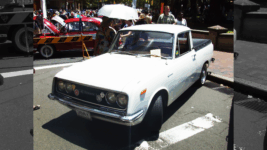
New South Wales police have charged a 22-year-old man with several crimes, including receiving stolen goods from outside of NSW, following a police pursuit on Gomeroi land, which commenced when officers attempted to stop a Toyota utility in the NSW regional town of Boomi. The suspect then allegedly led officers on a chase, prior to dumping the ute in bushland and being apprehended.
New England Police District officers attempted to stop the Toyota vehicle on Carrigan Road in Boomi at about 12 pm on Monday, 14 September 2026, following reports that the same vehicle had been stolen from an address in Queensland, earlier that same day. The 22-year-old allegedly failed to stop and that’s when the pursuit broke out.
The man drove the Toyota across farmland and various other roads, prior to returning to Carrigan Road, then Dolgelly Road and onto Letter Box Road, prior to moving onto the Newell Highway and then again entering bushland with the vehicle.
Following police inquiries and some assistance from community members, the Toyota was found dumped down the bush not long afterwards.
And after further inquires and with the assistance of the NSW Police Dog Unit, officers then arrested the 22-year-old man nearby the abandoned vehicle. And five rounds of ammunition were also located in his possession.
The man was then taken to Moree Hospital for treatment of minor injuries, prior to being taken into Moree police station, where he was charged with police pursuit, possession of ammunition without a licence, permit or authority, along with receive stolen goods from outside NSW. And the suspect was refused bail prior to having to appear before Bail Division Court 5 on Tuesday, 15 September.
The crime of receive stolen goods from outside the state
The 22-year-old is now facing one count of receiving goods stolen from outside of NSW, which is contrary to section 189A of the Crimes Act 1900 (NSW). This offence carries up to 10 years prison time. And in this current case, the 22-year-old is suggested to have been in possession of the stolen vehicle from Queensland.
To establish the crime has been made out, it must be proven beyond a reasonable doubt that the accused received, disposed of or attempted to dispose of “property stolen from outside the state of NSW”, and that the property was stolen, that the stealing of it occurred outside of NSW, that those charged knew the property was stolen, and that the suspect had no lawful excuse for their conduct.
In terms of property being stolen, section 189A further explains that property is deemed stolen when it has been “taken, extorted, obtained, embezzled, converted, or disposed of”, under circumstances that if perpetrated in NSW, would subsequently lead to the actor being found guilty of an indictable offence, under the laws of this state at that time.
This section of the Crimes Act further clarifies that “if the taking, extorting, obtaining, embezzling, converting, or disposing of” said property was not a criminal offence in the country in which the act was committed, then no one will be liable to conviction under section 189A.
Defences against receive stolen goods from outside NSW
There are a number of legal defences that an accused can raise against a charge of receiving goods stolen outside of NSW.
One of these is the defence of claim of right. This defence essentially means that an accused claims that they were in possession of the stolen goods, because they believed they had a legitimate right to possess them.
The authority for the defence of claim of right is the 2001 NSW Court of Criminal Appeal decision R versus Fuge, in which it was found that the claim must involve a belief in the right to property in another’s possession, it must be a genuine belief, not necessarily reasonable but true all the same, and the claim to right must also be based on legal entitlement, not some moral form.
A claim of right can be raised in cases involving assault or a weapon. The claim doesn’t have to be about specific property or cash, and rather, it could comprise something of equal value to the property the claim is attached. The claim must cover everything taken or in possession. Accessories to the crime are not libel if the defence is made out. And the prosecution must negate such a claim.
Another popular defence raised against receive stolen goods from outside NSW is that of duress. The defence of duress comprises of the accused claiming that they perpetrated their suspect acts in response to a threat by another against them or one of their loved ones, which then led the accused to commit their crime in order to avoid the harm against themselves or the other.
The defence of necessity can too be raised against a charge of receive stolen goods from outside the state. Necessity involves the accused claiming they perpetrated their crimes, as they were necessary to avoid a much greater peril. So, if the 22-year-old possessed the stolen Toyota utility in order to drive and stop a James Bond villain from dropping a bomb on Sydney, this defence may hold.
Early twentieth century lawmaking
The crime of receive stolen goods from outside of NSW was inserted into the Crimes Act, via the Crimes (Amendment) Bill 1924, which was introduced into NSW parliament by then NSW attorney general Thomas Bavin on 31 July 1924. And the NSW Nationalist party chief lawmaker told parliament that the key reason for the new laws was a rise in crime in NSW.
Besides the creation of the section 189A offence, the legislation also inserted a definition of grievous bodily harm into the Crimes Act, along with a law that criminalised schoolmasters, teachers, fathers and stepfathers if they’ve attempted to have sex with a girl aged between 10 and 17, who was their student or their daughter or their stepdaughter, which was punishable by 7 years prison time.
However, Broken Hill newspaper The Barrier Miner reported that the passage of the bill through NSW parliament was not smooth sailing, as former Labor attorney general Sir Edward Aloysius McTiernan suggested that the bill was “a policeman’s measure” that only sought to bump up convictions. He added that every amendment in the bill favoured the Crown over the defence.
McTiernan further insisted that rather than spending all its time trying to lock up criminals, the NSW Nationalist government ought to have rather considered progressing social and prison reforms. The Labor MP added that it was commonly understood that the offenders appearing before the courts were seasoned criminals, and past attempts at reform had failed.
And to the surprise of many, Country Party MPs Lieutenant Colonel Sir Michael Frederick Bruxner and Major Robert Bruce Walker both agreed with McTiernan’s suggestions on the need for reform that provided a different approach to simply relying on the locking up lawbreakers and expecting that this would result in law-abiding community members exiting gaol.
Image: Toyota Corona RT46 Ute was taken by car_spots oz and is licensed under CC BY 2.0

Paul Gregoire

Receive all of our articles weekly
Related Articles
 The Offence of Stealing a Motor Vehicle, Vessel or Trailer in NSW
 The Law, Defences and Penalties for Stealing a Motor Vehicle or Vessel in NSW
 Proof of Stealing or Taking a Motor Vehicle Can Be Elusive for Prosecutors
 Stealing, Theft and Larceny Offences Across Australia
 The Criminal Offence of Stealing Cattle in New South Wales
 The Law, Defences and Penalties for Larceny in New South Wales