Police Need to Combat Racial Profiling and Ditch Race Descriptors, Ombudsman Asserts
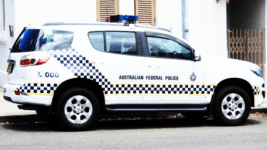
On 11 November 2025, three Australian Capital Territory policing officers boarded a bus on Ngunnawal land bound for the Canberra suburb of Tuggeranong and hauled a 17-year-old Aboriginal boy, known as Jay, off it at gunpoint, in a case of mistaken identity. And the dodgy manner in which this played out led the ACT Ombudsman to recommend the agency reconsider ‘racial profiling’.
Released on 25 August 2026, the ACT Ombudsman report “It’s Not Him” outlines that at the time of the incident, ACT policing had put out a search call for an “Aboriginal male” with a knife and “black clothing”, who’d allegedly perpetrated an aggravated burglary and attempted a carjacking, only to then run towards the Woden bus interchange. And Transport Canberra was contacted about this.
ACT policing was then alerted to a potential suspect on a particular bus, and an arrangement was made for it to stop. Officers, two with drawn guns, then boarded the bus and had Jay rise up and walk off it with hands on his head. Jay was then tripped up by an officer on disembarking, so that he fell to the ground face first, and an officer then placed his knee on the boy’s back.
Jay was then handcuffed, as new officers arrived at the scene, and leading senior constable Gum then realised this wasn’t the suspect, who he’d spotted earlier. So, the boy was then searched. And one officer recognised him, but no one officially identified him, prior to officers apologising for the mistake, providing him with a card with an incident job number and placing him back on the bus.
In the immediate aftermath, the family called out the incident as racial profiling. And as the Australian federal police inquired into the matter for internal purposes, the ACT Ombudsman probed it on behalf of the community. And of the eight recommendations made in its report, one involved consideration around racial profiling, while another questioned the use of race as a descriptor.
Racial profiling
The ACT and Commonwealth Ombudsman Iain Anderson is clear that the incident involving the wrongly apprehended Aboriginal boy comes as relations between local Aboriginal and Torres Strait Islander communities and law enforcement have been strained. And the incident further occurred during a time when ACT policing is actively trying to improve engagement with these communities.
The Ombudsman found that as the assailant being sought had been described as Aboriginal, officers should have been aware of this engagement and the potential for racial profiling, or identifying a suspect based on race, which can then lead to disproportionate use of powers, escalation of incidents to charges, unjustified stops and searches, as well as extra infringement notices.
The report sets out that the AFP and its community arm, ACT policing, are bound to the Racial Discrimination Act 1975 (Cth) (RDA), which makes it unlawful to discriminate based on race. But there is no definition of racial profiling within AFP codes. And the Ombudsman considers that the apprehension of Jay relied heavily on race and the lack of a definition contributed to the incident.
Racial profiling, however, is difficult to prove in specific incidents. The officers involved in Jay’s case deny that race played a role. The Ombudsman found that constable Gum did intend to use “Aboriginal” as a descriptor, but this was not “particularly useful” given the diverse physical and cultural appearance of First Peoples, especially as the descriptor appeared to mean dark skinned.
The Ombudsman recognised that physical descriptors, like skin colour, can be important in inquiries. Yet, the use of the term ‘Aboriginal’ is an “outdated” and “stereotypical” way to describe physical traits. But it was also found that Jay was the only person on the bus dressed like the description. The report then notes that Jay’s race didn’t lead to any heightened or extreme use of force.
The use of force
In terms of officers realising their mistake and then searching the boy and placing him back on the bus, the Ombudsman found that the “officers failed in their responsibilities to Jay, as a young Aboriginal person, who had just been through a traumatic experience at their hands”. The inquiry further determined that the “opportunistic” search was carried out in an unlawful manner.
The Ombudsman considered that Jay, an innocent teenager, being arrested had been “subjected to the use of potentially lethal force”, which included the use of guns, one officer having a taser drawn, the tripping up of Jay to put him to the ground and the handcuffing of the boy.
ACT policing officers are trained to draw a weapon when a knife might be in use, and the Ombudsman considered that the use of tasers or pepper spray by the three officers who entered the slim confines of the bus with 20 passengers positioned around it, would not have been the best option, and the officers were correct in deciding to use their guns.
The ACT Ombudsman too determined that it was acceptable for an officer to trip Jay up, as it was essential to “take the suspected offender to the ground as quickly as practicable”, although its unsure as to whether the technique complied with AFP training. And “no evidence to support the view that race led to increased, heightened or more extreme uses of force” was found.
As for simply placing the boy on the bus without properly identifying him, the Ombudsman found that the officers involved had failed in their responsibilities to the young Aboriginal boy, who’d just experienced a significantly traumatic event at their hands. And this further permitted the boy not to tell his family about the incident until several days afterwards.
Race as descriptor
The ACT Ombudsman has made eight recommendations in light of the incident involving Jay’s wrongful arrest. The second recommendation involves the AFP establishing a clear and official definition of what racial profiling is and how it doesn’t align with the Racial Discrimination Act, and this should be present in various policing materials.
The report further notes that there appears to be a narrow definition of racial profiling circulating within the AFP, and this understanding considers that it occurs when race has been the sole or primary means of identifying a suspect. Yet, international definitions of racial profiling consider “any degree” of race being used as an identifier to involve the biased practice.
The third Ombudsman recommendation is that “ACT policing review its use of race as a proxy to describe a person’s physical traits with a view to adopting objective descriptors”.
Indeed, the Office of the ACT Ombudsman considers that the use of Aboriginal as a descriptor in Jay’s incident was not useful, “given the diverse appearance of people who identify as Aboriginal”.
“Australia’s population is extremely diverse, with people having many different countries and cultures of origin,” the report further clarifies. “Australia’s First Nations population is also physically and culturally diverse.”
The Ombudsman further recognised that descriptions of people’s appearance are essential in policing inquiries. But this doesn’t involve the continued use of terms like “Aboriginal”, as shorthand for dark skinned, when this term actually describes people with a variety of skin colours, and therefore, the use of race as a descriptor leads to misidentifications, prejudice and unjust outcomes.
“We are concerned that the AFP originally adopted a narrower definition requiring race to be the ‘sole’ factor. We consider this may have been inconsistent with their obligations under the RDA,” the ACT Ombudsman further set out in making these recommendations.
“We also consider that not having a clearly understood definition across the AFP may prevent the AFP and ACT policing from fully identifying systems or processes that may indirectly lead to racial profiling or other discriminatory practices,” the independent oversight official added.
Image of AFP vehicle by Paul Gregoire

Paul Gregoire

Receive all of our articles weekly
Related Articles
 What Is the Difference Between Criminal Barristers, and Solicitors?
 Domestic Violence in Indigenous Communities: It’s Time for Change
 Commonwealth to Strengthen Laws Against Online Bullying
 What Does the Law Say About Consent in Sexual Assault Cases?
 Should Juries Be Sequestered More Often in Australia?
 Albanese Follows Trump’s Lead by Increasing Military Spending Whilst Cutting Disability Funding